SEARCH
  

Back

Opening hours

Tuesday to Sunday

10 am to 6 pm


Audioguide
Prologue Terminal Piece

Audio Guide | Prologue Terminal Piece

The Prologue on Level 0 marks both the beginning and the end of Terminal Piece. Here, set designer Anna Viebrock created not only spaces for works from the mumok collection, but spaces for people: a study, a church, a living room, a basement. Many of these artworks spent decades in storage — now they make a reappearance. This audio tour guides you through a selection of them, and invites you to observe not just the art, but how you see it.


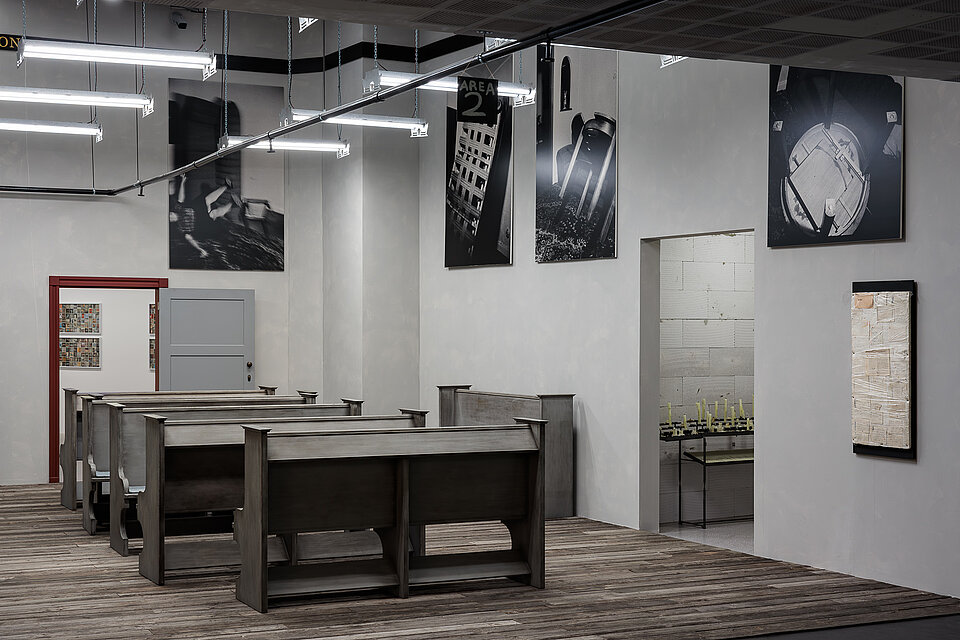
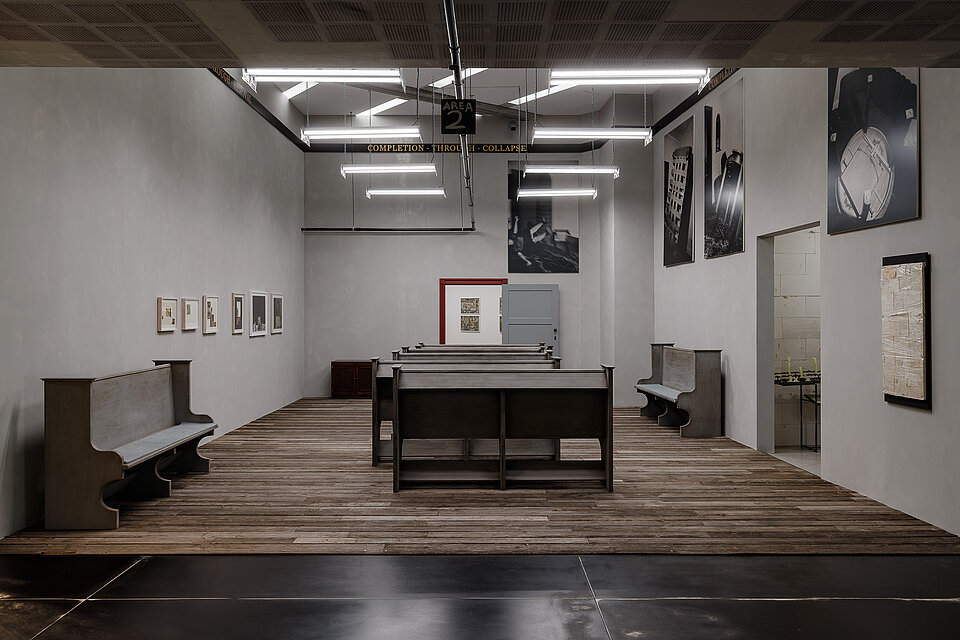
                Exhibition space with wooden flooring and several pew-like seating rows, illuminated by suspended fluorescent lights; photographs and large-format black-and-white works are displayed on the walls.

Intro

With this audio tour, we’ll guide you through a diverse selection of very special works from our new collection presentation. Keep to the right and move counterclockwise. 
Download Transcript


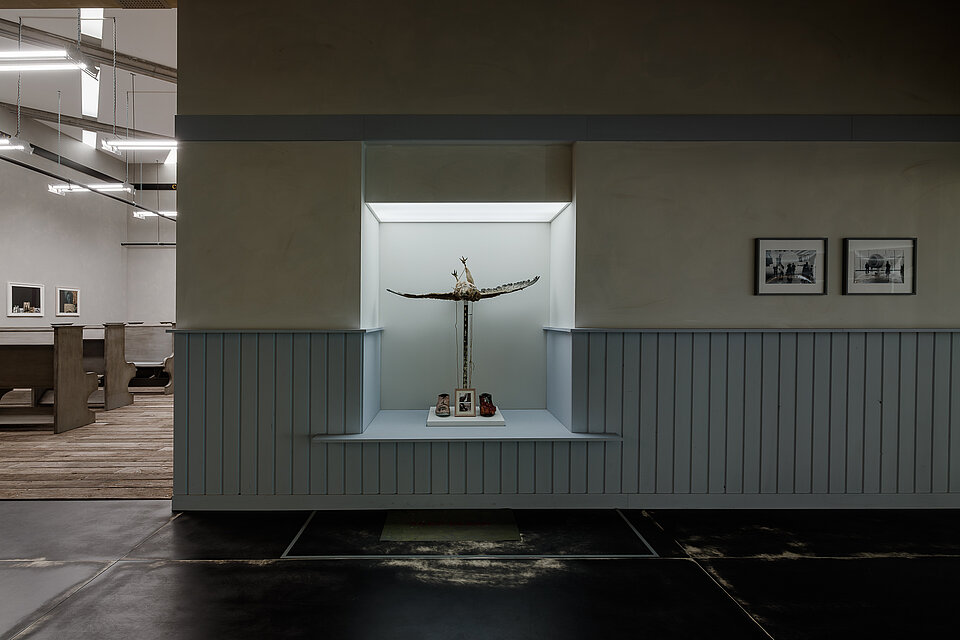
                Wall niche with a lit display containing a bird-like sculptural form with outstretched wings and smaller objects on a pedestal; two framed photographs are mounted to the right.

Study

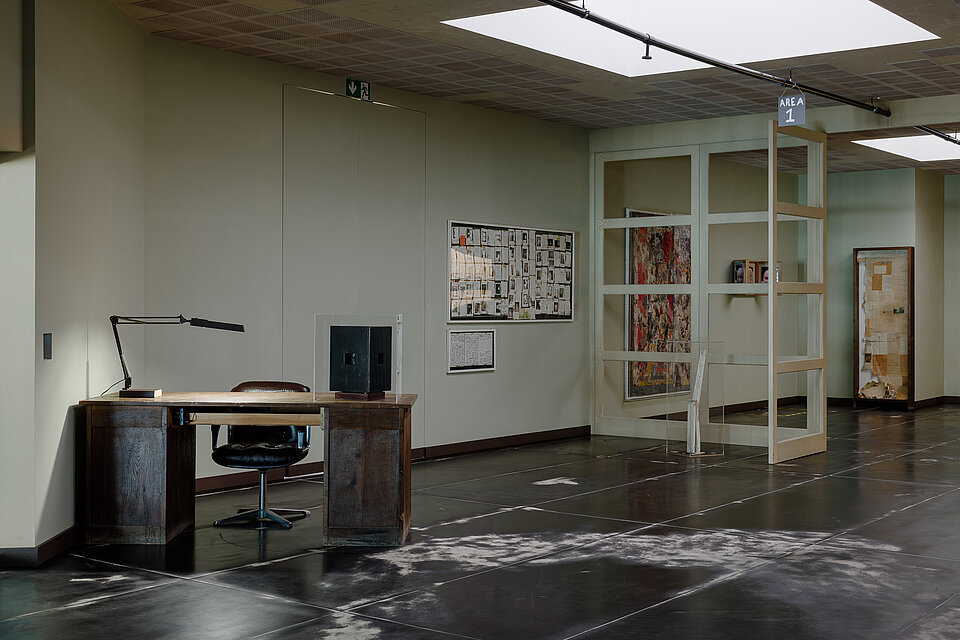
Paul Thek’s first “work in progress.” The exhibition space became a studio at the same time. Production and presentation, usually kept separate, merged here — and with it came a question: when, exactly, is a work of art “finished”? 

Download Transcript


                Installation space featuring several pew-like seating rows on a wooden floor, large black-and-white photographs mounted high on the walls, and an adjoining room containing numerous upright candles.

Church

Pause for a moment with the works. Do they seem intriguing, or perhaps even eerie? Listen closely, and take a second look. Some of the artworks have a humorous side too — among them the tumbling furniture and people in the Blumes’ photographs, or Degenhardt’s candles. 

Download Transcript


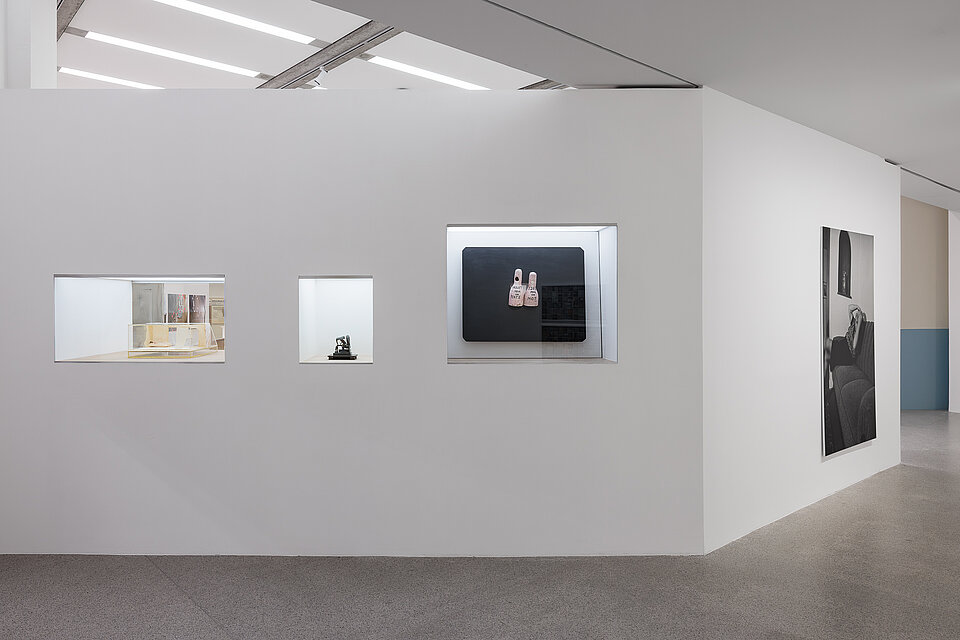
                White exhibition space with three wall-integrated display cases presenting different objects; on the right, a large black-and-white photograph is mounted at the end of a passageway.

Corridor 1

Set into the exhibition wall, you’ll find three display vitrines holding small, delicate artworks. The first one also offers a view into the next room. On the right, in the glass case, you’ll see a wall installation by the Belgian artist Marcel Broodthaers; in the central vitrine, a small lead casting: Bruno Gironcoli’s Handwerker bei der Arbeit (‘Craftsmen at Work’). 

Download Transcript


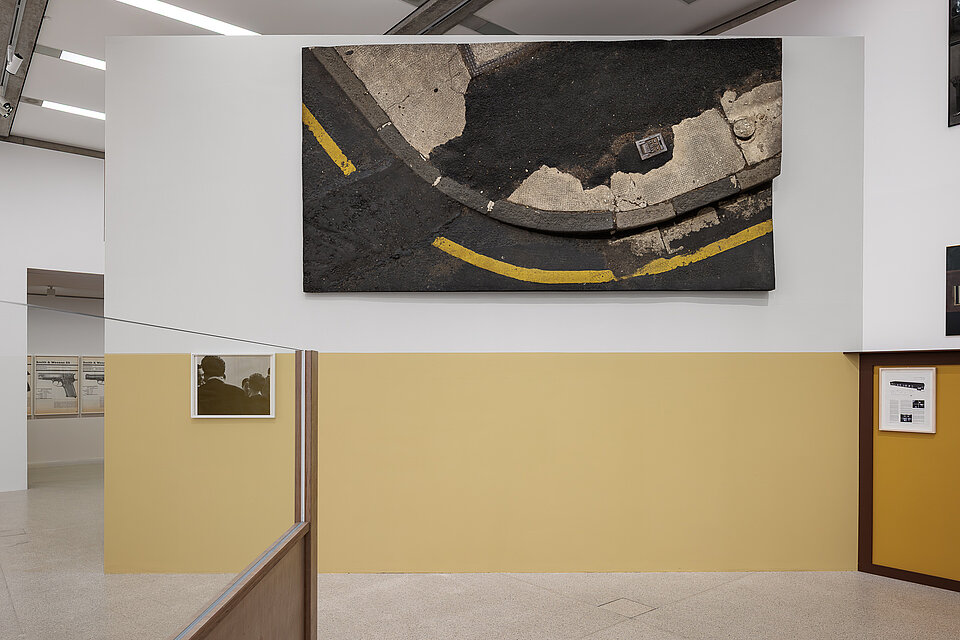
                Exhibition view featuring a large-scale artwork depicting a street surface with yellow road markings; framed photographs and documents are displayed below and beside it on a two-toned wall.

Hall

The space opens up wide, revealing itself as a museum gallery for the first time — neutral lighting, high ceilings. A large wall installation depicts a street corner, scaled one to one. What looks like a photograph is in fact a cast — a real street kerb, recreated in painted fibreglass. 

Download Transcript


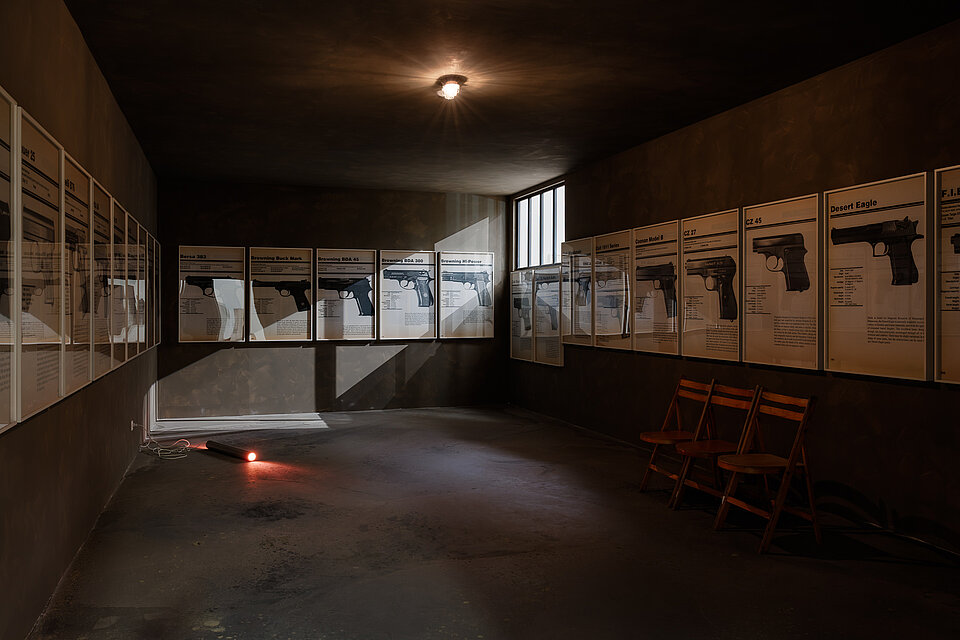
                Dark exhibition room with framed panels on the walls showing images and descriptions of various handguns; light enters through a narrow window, and several folding chairs are positioned nearby.

Basement

Poster-sized, framed pigment prints run through the dark, gloomy room like a common thread. This is Firearms by Lutz Bacher, 2019. The artist has reproduced and significantly enlarged pages from a handbook on the repair and maintenance of firearms. 

Download Transcript


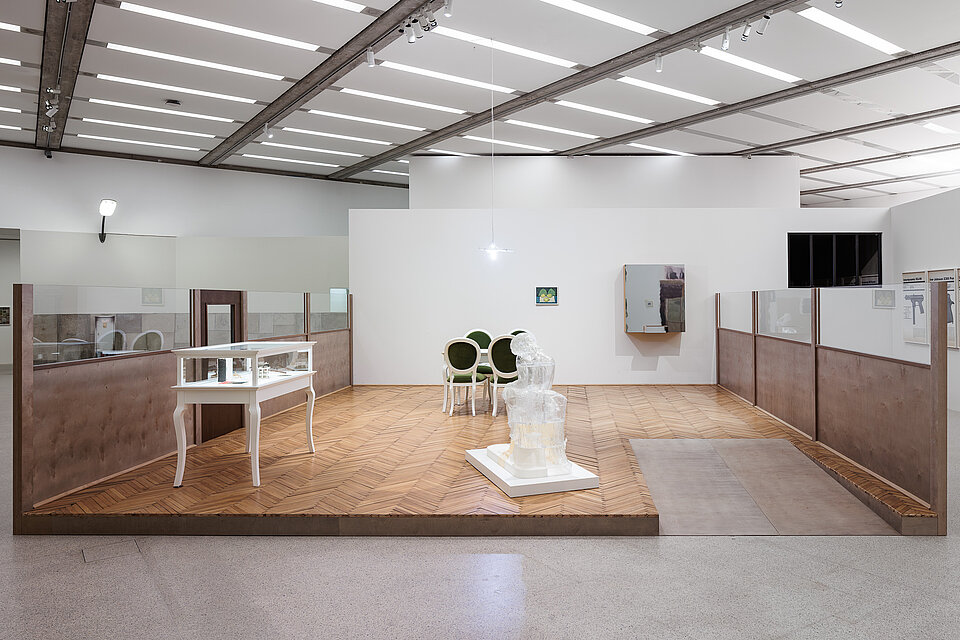
                Exhibition installation on a raised parquet platform featuring a display case, several chairs, a transparent sculpture, and small wall-mounted artworks; half-height partitions structure the space.

Living Room

A wall that’s oddly low, with a door you can’t pass through. The herringbone parquet rises like a small platform from the grey terrazzo floor, a step above it. What does this bring to mind? Does it remind you of your own four walls? 

Download Transcript


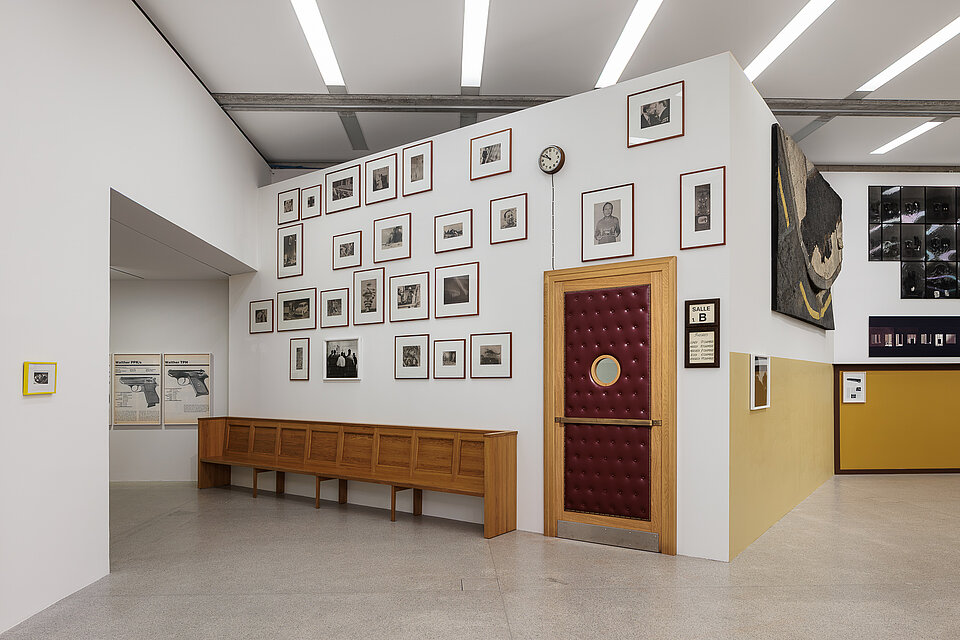
                Exhibition view featuring a padded red door, a long wooden bench, and a densely arranged group of framed photographs on a white wall; additional artworks and documents are visible to the right.

Hall

Back in the hall, there’s a life-size, seated man in profile, printed onto a reflective surface. This is Sitzender Mann im Hemd (Seated Man in a Shirt) by Michelangelo Pistoletto, 1993, part of his well-known series of mirror works. 

Download Transcript


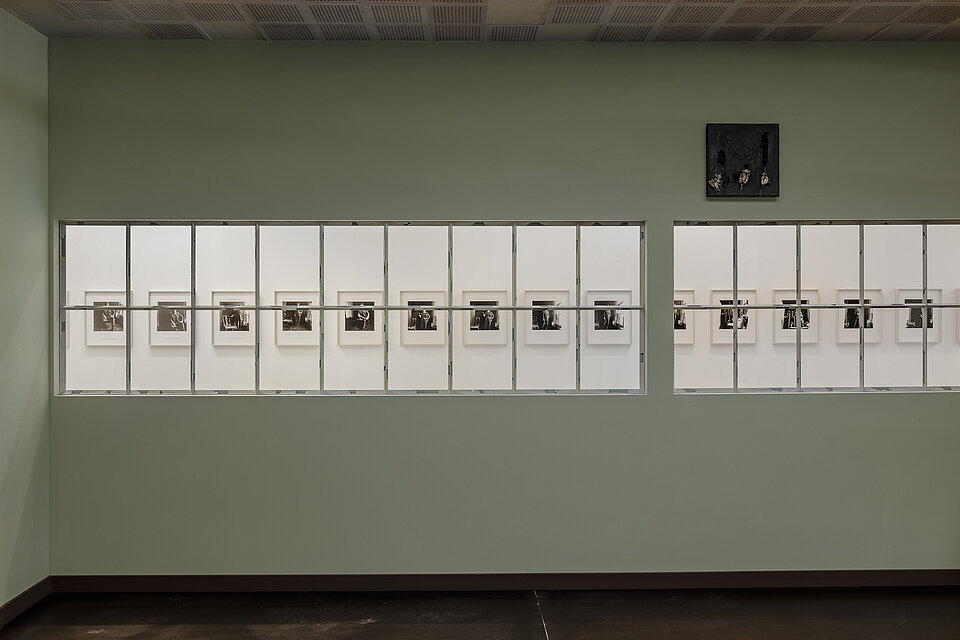
                Light green corridor with two long glazed wall openings revealing a row of framed black-and-white photographs in an adjacent exhibition space; a small dark artwork is mounted above.

Corridor 2

You’re now standing in the rear corridor of the Prologue. At the entrance you’ll find Anna Viebrock’s workbook for “Doktor Faust”: notes, images, comments, impressions, and encounters surrounding the work. Further along the corridor hangs a series of 25 portrait photographs of Rudolf Schwarzkogler. 

Download Transcript


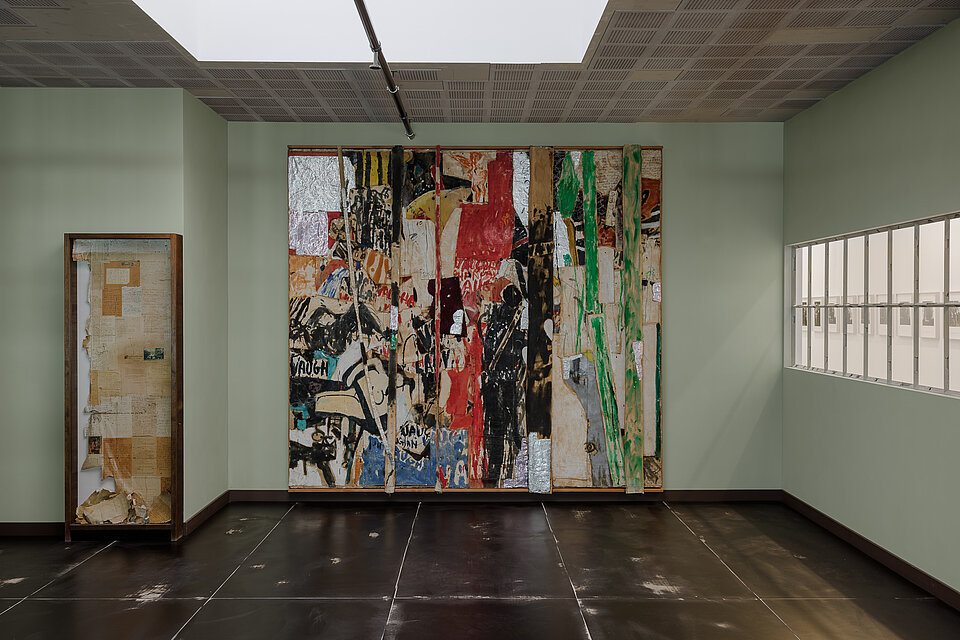
                Light green exhibition room featuring a large collage-like artwork composed of paper fragments, colored areas, and remnants of text; on the left stands a narrow glazed object containing aged documents, while a glazed wall opening is visible on the right.

Area

Allan Kaprow arranges found objects, everyday materials, and fragments of his own cut-up paintings in vertical strips. Richard Hamilton and Dieter Roth’s “Interfaces”, by contrast, consists of three hinged panels. The two artists often worked together, deliberately sharing authorship — it didn’t matter to them who had contributed which part. 

Download Transcript


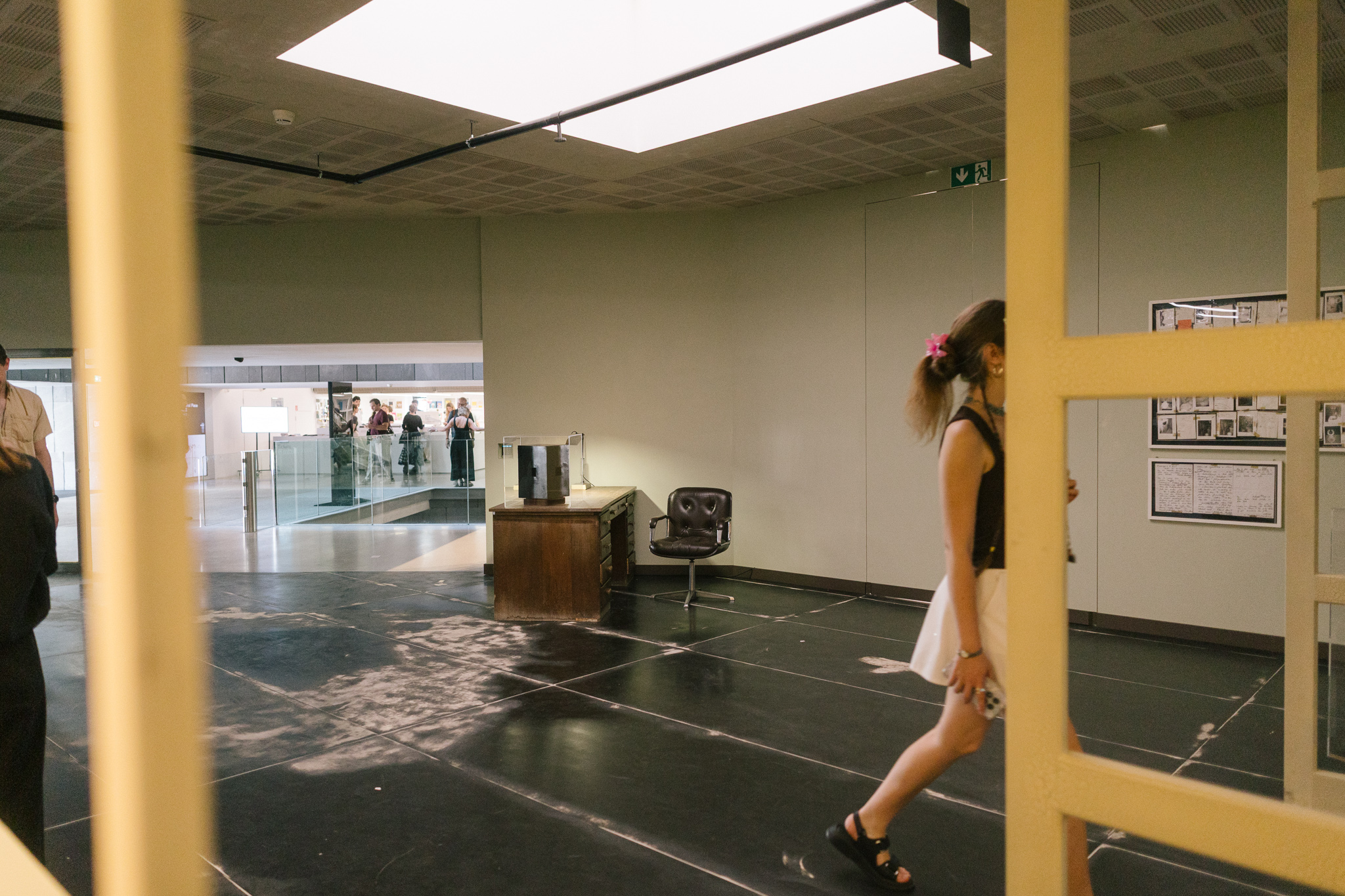
                Exhibition area featuring a dark wooden desk, desk lamp, and swivel chair; in the background are framed works, a glass room structure labeled “AREA 1,” and additional artworks.

Study

On the corner of the desk sits a black cube, seemingly placed there in passing. The lacquered wooden cube is the artwork Untitled by Sol LeWitt, 1963. 

Download Transcript


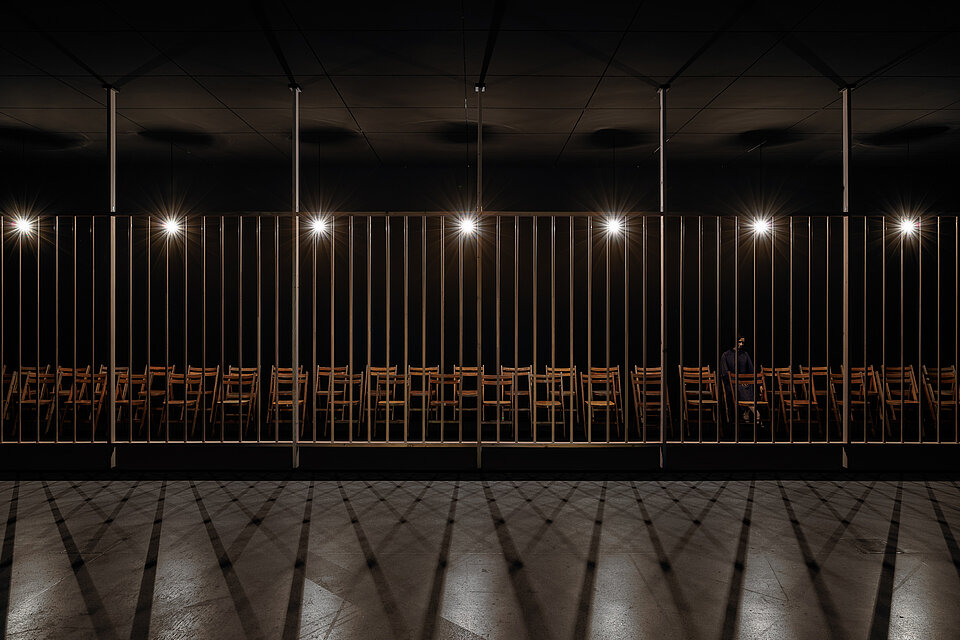
                Dark room with a long row of wooden chairs positioned behind a tall metal grid structure; several point light sources create pronounced shadow patterns across the floor.

Outro

On the fourth floor, Terminal Piece awaits you — the artwork that gives this entire exhibition its name, created by Kate Millett, artist, activist and author. It’s the most recent addition to our collection — and makes a statement that holds true for this Prologue too: a work of art is only complete through you. Through your presence as a viewer. 

Download Transcript


Texts
Luciano Pecoits

Translation
Bryony Dawson

Speakers
Bryony Dawson
Marie-Claire Gagnon

Audio Direction, Editing, and Production
Robert Schwarz

Photos
Exhibition View
Terminal Piece
Photo: kunst-dokumentation.com / Manuel Carreon Lopez